

$100 off October Barista Skills Courses!


Pre-Harvest Science Writes the Cup
Pre-Harvest Science Writes the Cup

I have been thinking a lot about what really writes flavor into a cup before we ever touch a roaster.
We love to talk about roast curves, processing methods, grinders, water chemistry, and brewing recipes. All of those factors matter. But the truth is that much of the story has already been written in the field.
Recent research is shifting attention from what happens after picking to what the plant itself programs into the seed during the months before harvest.
Three elements are central to this process:
genetics, maturation, and environment.
Genetics influences what the plant is capable of producing. The environment shapes the conditions under which that potential develops. Maturation determines how much of that biochemical potential has accumulated in the seed by the time the cherry is harvested.
These factors are not simply additive. They interact continuously. That is why the same variety can produce different sensory expressions across farms, elevations, harvest years, and environmental conditions, even before processing and roasting introduce additional layers of variation. [1]
Genetics Is More Than a Variety Name
One of the most significant developments in coffee research has been the movement from discussing varieties only by name to studying their underlying chemistry.
A variety is not simply a botanical or commercial label. Its genetic background influences the pathways through which the plant produces and stores carbohydrates, lipids, caffeine, chlorogenic acids, trigonelline, terpenes, and many other compounds that may later contribute to the sensory expression of the coffee.
This does not mean that flavor is controlled by one specific “flavor gene.”
Recent genomic studies instead show that multiple regions of the coffee genome contribute to differences in chemical composition. A genome-wide association study published in 2026 identified 14 major regions of the genome associated with variations in cell-wall polysaccharides in a genetically diverse collection of Coffea arabica and Coffea canephora. [2] These genomic regions, known as loci, suggest that variation in cell-wall composition is influenced by multiple parts of the coffee genome rather than by a single gene.
This matters because carbohydrate polymers account for more than half of the dry weight of green coffee beans. During roasting, these carbohydrates participate in thermal degradation, Maillard reactions, and other chemical transformations that contribute to aroma, color, mouthfeel, and flavor.
In other words, before roasting begins, the plant’s genetics have already influenced the raw materials available for roasting chemistry.
The broader review of coffee-quality determinants also discusses the role of transcription factors, including the MYB family. [1]
MYB proteins are regulatory proteins. They do not create flavor directly. Instead, they help control the expression of genes involved in different metabolic pathways, including pathways associated with caffeine, chlorogenic acids, pigmentation, plant defense, and terpene production.
It is therefore useful to think of them as part of a complex genetic control system rather than as individual “flavor switches.”
The plant’s genetic background establishes a range of possibilities. It influences what the plant may be capable of producing, but it does not guarantee that all of that potential will appear in the cup. Genetics establishes the blueprint. The environment and the development of the fruit determine how that blueprint is expressed.
Maturation Is a Biochemical Process
Maturation is not a straight line from green to red in which flavor simply improves with every additional day on the branch.
As the coffee cherry develops, the metabolic activity within the fruit changes. Sugars, amino acids, organic acids, phenolic compounds, flavonoids, and other potential flavor precursors do not remain constant throughout ripening.
Research integrating metabolomics and proteomics has demonstrated that major classes of flavor precursors change substantially as Arabica cherries mature. By comparing cherries at different stages of ripeness, researchers identified significant changes in proteins and metabolites involved in sugar metabolism, amino-acid metabolism, organic acids, and flavonoid pathways. [3]
This gives selective harvesting a biochemical explanation.
When green, partially ripe, fully ripe, and overripe cherries are harvested together, the seeds inside them are not at the same stage of chemical development.
Some seeds may have progressed further in the accumulation and transformation of flavor precursors. Others may still contain a greater proportion of compounds associated with immature fruit and plant-defense chemistry.
That variability enters the lot before processing begins.
Processing and roasting may modify how that variability is expressed, but they cannot completely erase the differences already present in the raw material.
At the same time, we should not interpret this to mean that the longer a cherry remains on the tree, the better the coffee will become. There is an optimal window.
Organic acids such as citric and malic acid do not continue increasing indefinitely. Sugars may be consumed through respiration or transformed as the fruit becomes overripe. Microbial and fermentative activity may also become more prominent as the cherry begins to deteriorate.
What matters is not maximum time on the branch. What matters is sufficient development under suitable conditions, followed by harvest at the appropriate stage of physiological maturity.
Ripeness is therefore more than a color. It represents a biochemical stage in the development of the fruit and the seed.
Environment Controls the Conditions of Expression
Altitude is often discussed as though it were a direct ingredient in flavor. It is not.
Altitude acts through several environmental variables, including temperature, thermal amplitude, rainfall, solar radiation, wind exposure, atmospheric conditions, and the rate at which the fruit develops.
Cooler temperatures may reduce the speed of respiration and extend fruit development. Moderate shade may reduce heat stress and modify the microclimate surrounding the plant. Excessive shade, however, can limit photosynthesis and carbon assimilation, restricting the plant’s capacity to produce and transport carbohydrates. [1]
The relationship is not as simple as: Higher altitude equals more sugar and better coffee.
A 2024 study of Pu’er coffee grown between approximately 930 and 1,520 meters illustrates this complexity. The researchers found that fatty-acid concentrations increased with altitude, while alkaloids and chlorogenic acids generally decreased. Organic acids and monosaccharides did not show one consistent upward or downward trend. [4]
Of the 112 volatile compounds detected, only 11 were significantly affected by elevation. Some compounds associated with nutty and roasted aromas decreased, while certain aldehydes associated with sweeter and caramel-like characteristics increased.
During sensory evaluation, aroma and flavor scores tended to improve with elevation, while attributes such as body, balance, acidity, and aftertaste showed comparatively little change.
The study therefore supports the conclusion that altitude can influence coffee chemistry and sensory expression, but it does not show that every compound responds to altitude in the same way.
Altitude changes the environmental conditions under which the plant grows. It does not guarantee a particular flavor or cup score.
Soil and microbiome research add further complexity. Microorganisms in the rhizosphere can influence nutrient availability and plant stress responses. Microorganisms living on the surface of the cherry may later become part of the microbial community involved in post-harvest fermentation. (Rhizosphere: the biologically active zone of soil immediately surrounding the coffee plant’s roots, where roots, microorganisms, nutrients, and water interact. It is a biologically active interface created by the plant itself.)
Terroir is therefore not one variable. It is a network of environmental, biological, agronomic, and genetic interactions.
Genetics, Environment, and Maturation Work Together
A simple way to describe their relationship is: Genetics writes the song. Terroir determines the conditions under which it is performed. Maturation decides whether we hear the complete version.
The metaphor is useful as long as we understand its limitations.
An environment cannot create a genetic pathway that is not present in the plant.
Excellent growing conditions may help a cultivar reach the best expression of its own potential, but they cannot make every variety produce the aromatic profile associated with Gesha, for instance.
At the same time, a cultivar with exceptional genetic potential can produce a muted or unbalanced cup if it develops under unsuitable temperatures, severe stress, inadequate nutrition, irregular fruit maturation, or imprecise harvesting.
The same farm and the same variety can produce different expressions from one year to the next when rainfall, temperature, solar exposure, or plant stress changes during fruit development.
The genetic blueprint may remain the same. The conditions under which it is expressed do not.

Gesha: Genetic Potential Is Not a Flavor Guarantee
Gesha provides a useful example of how genetics and environment interact.
World Coffee Research classifies the Panamanian Geisha descended from accession T2722 as an Ethiopian landrace. It is associated with exceptionally high cup quality when managed well at high altitude and is known for delicate floral, jasmine, and peach-like aromas. [5]
World Coffee Research also warns that several genetically different plants have been called Gesha or Geisha. The famous Panamanian material descended from T2722 is considered genetically distinct and relatively uniform, but not every coffee sold under the Gesha name necessarily represents that exact material.
The history of the T2722 material begins in western Ethiopia.
A chromosome-level genome study of Coffea arabica var. Geisha describes it as an Ethiopian landrace representing germplasm connected directly to the Ethiopian center of origin of Arabica coffee. It originated in the forests of the Gesha region and was collected around 1936. [6]
Seeds were moved through Kenya and Tanzania before being taken to CATIE in Costa Rica in 1953. From CATIE, the material was later distributed to Panama, where it eventually became famous for its distinctive sensory profile and exceptional auction prices.
High elevation is frequently associated with the most celebrated expression of Panamanian Gesha. Hacienda La Esmeralda describes the mountains of Boquete as contributing to the expression of the variety’s floral and citrus aromatics. [7]
However, this should be interpreted as a farm-specific observation and not as proof that elevation alone creates those aromas.
Gesha should not automatically be described as a very late-ripening cultivar that always remains on the branch 30 to 60 days longer than varieties such as Caturra.
World Coffee Research classifies the ripening time of Panamanian Geisha as average. [5] Environmental conditions may extend or shorten fruit development, but that is different from saying that the cultivar is inherently an exceptionally slow ripener.
Gesha has a distinct Ethiopian genetic background and exceptional sensory potential, but the expression of that potential depends on environment, plant health, maturation, harvesting, processing, roasting, and preparation.
The name alone does not guarantee jasmine in the cup. Have you ever experienced a Gesha that does not show the floral profile? I have, indeed!
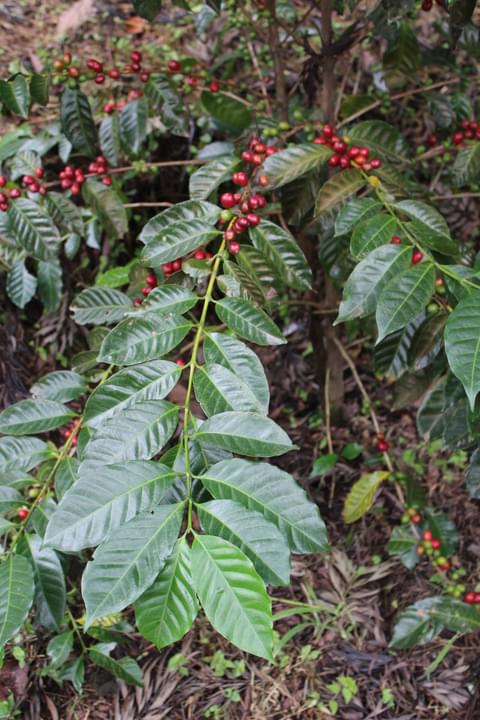
Picture property of World Coffee Research
Pink Bourbon: When the Name and the Genetics Do Not Match
Pink Bourbon is a strong example of why a commercial or local name should not be treated as a genetic diagnosis.
The 2022 genetic-diversity study by Montagnon and colleagues included Pink Bourbon among four cultivated varieties described as having a clear Ethiopian genetic background, together with Gesha, Chiroso, and SL-06. [8]
This challenges the traditional explanation that Pink Bourbon originated as a spontaneous cross between Red Bourbon and Yellow Bourbon.
That explanation appeared logical because plants called Pink Bourbon were often found in Colombian Bourbon populations, and their cherries developed a pink or salmon coloration rather than the typical deep red.
Café Imports began genetic testing of Pink Bourbon material in 2017. Later testing included five samples from Colombia and Costa Rica. According to the detailed reporting, all five were identified as containing Pink Bourbon material, but the results were not genetically uniform: two samples showed Bourbon admixture, two showed Catimor admixture, and one was described as “pure” Pink Bourbon. [9]
This distinction is essential. The results do not support describing every plant called Pink Bourbon as one genetically identical Ethiopian landrace.
Instead, they suggest that the commercial name is being applied to a heterogeneous population containing material with a strong Ethiopian connection, sometimes accompanied by admixture from other cultivated groups.
The distinctive cherry coloration remains one of the main features by which farmers recognize these plants. Industry descriptions explain that the fruit may stop at a salmon-pink color instead of developing the deep red associated with many other ripe Arabica cherries. [10]
That visible trait, however, does not establish the plant’s complete pedigree.
Industry sources frequently describe Pink Bourbon cups as floral, fruit-forward, and characterized by bright acidity. [11] Other roaster descriptions connect the reported Ethiopian background with refined acidity and pronounced floral aromatics. [12]
These sensory descriptions are useful for understanding how the coffee is presented and experienced in the market.
They are not genetic evidence.
In summary: Recent genetic research points toward a strong Ethiopian background in at least some material identified as Pink Bourbon, but the name is applied to a heterogeneous population and should not be treated as proof of one uniform pedigree.
Pink Bourbon shows us that the label on the bag may tell us what farmers and buyers call a plant. It does not necessarily tell us exactly what the plant is.
Chiroso: A Name Based on Appearance, Not Necessarily Parentage
Chiroso provides stronger peer-reviewed evidence of a mismatch between a local name and the plant’s genetic identity.
A 2021 genetic-diversity study placed the Chiroso sample it analyzed within the Ethiopian-Only cluster. The researchers described Chiroso as one of the Ethiopian landraces that moved beyond Ethiopia without passing through the primary Yemen domestication pathway. [13]
This is significant because the names Caturra Chiroso and Bourbon Chiroso had encouraged the assumption that the plants were related to Caturra or Bourbon.
A later chloroplast-genome study examined three Colombian materials identified as Caturra Chiroso, Bourbon Chiroso, and Chiroso. The study connected them with Ethiopian-origin genetic material while also revealing complexity in their relationships with other Arabica groups. [14]
The results do not justify assuming that every plant called Chiroso is one genetically identical variety.
They do show that the local names should not be treated as proof of direct descent from Caturra or Bourbon.
Industry accounts explain that farmers used the terms Caturra Chiroso and Bourbon Chiroso partly because of the physical appearance and stature of the plants. [15]
These names reflected what the plants looked like in the field, not necessarily their genetic parentage.
Chiroso is frequently described in the coffee trade as highly aromatic, floral, bright, and tea-like. [16]
Again, we should be careful, a floral and tea-like cup does not prove Ethiopian ancestry.
The genetic evidence supports the Ethiopian connection. The sensory profile is consistent with that evidence but cannot establish it on its own.
Wush Wush: Strong Origin Tradition, More Limited Genetic Documentation
Wush Wush takes its name from the town of Wushwush in southwestern Ethiopia, close to the Bonga forest area in Kafa or Keffa.
Coffee-industry sources describe it as an Ethiopian regional landrace that later moved into Latin American production, particularly Colombia. [17]
It is frequently described as low-yielding and capable of high cup quality, with floral aromatics, fruit character, tea-like structure, and pronounced sweetness. [18]
The region associated with its origin is also known for tea cultivation, which adds an interesting geographical context to the name and its agricultural history. [19]
Some trade accounts state that Wush Wush material arrived in Colombia from Ethiopia approximately 25 years ago. [20] The sources supporting the reported movement of Wush Wush are primarily trade and educational publications rather than a dedicated peer-reviewed genomic reconstruction of the cultivar’s migration.
We should not make precise claims about its parentage, its exact relationship to Gesha, or its terpene-gene composition without direct genetic evidence.
The “Mother Forest” Idea—With Necessary Precision
There is a phrase that captures an important part of this history: Some coffees do not have a documented mother and father variety. They have a mother forest.
In other words, their genetic history is not always a clean family tree created by a breeder. It can be the result of generations of natural crossing, selection, and adaptation within a highly diverse forest population. an image, it is powerful.
Gesha and Chiroso are not known as breeder-created hybrids with a documented cross in the way that many modern cultivars are.
Their histories connect them directly with Ethiopian genetic diversity beyond the narrow Bourbon–Typica pathway. [6,13]
Wush Wush is also consistently associated with southwestern Ethiopia, although its precise genetic placement requires stronger published genomic evidence. [17]
But the phrase should not erase the complexity revealed by modern genetic research.
Arabica diversity does not divide neatly into one wild Ethiopian group and one Bourbon–Typica group.
Researchers have identified several genetic clusters across Ethiopia and Yemen, reflecting multiple histories of movement, isolation, selection, and domestication. [8,13]
This is why cultivar names can be misleading.
Names often follow physical appearance, local traditions, farm history, seed movement, or commercial convention. Genetic analysis may later reveal a lineage very different from the one implied by the name.

The Cup Begins Before Harvest
Roasting does not create flavor potential from nothing.
It transforms compounds already present in the green seed. Before the coffee reaches the roaster:
- Genetics has influenced what compounds the plant can produce and store.
- The environment has shaped the conditions under which the fruit developed.
- Maturation has altered the balance of sugars, acids, amino acids, phenolics, and other precursors.
- Harvest timing has determined which stage of that development was captured.
Brewing then determines how those transformed compounds are extracted and perceived.
That is why the same cultivar can taste different across farms, elevations, harvests, and seasons.
The cup may be revealed during roasting and brewing.
But much of it was written in the field.

Thank you for reading me and please always remember....
"Because behind each cup of coffee there is much more than roasted beans."
Written by María Esther Thome-López,
CQI Processing Professional
References
Scientific and institutional sources
[1] Yang, G.-B., Cen, Q.-J., Bin, Z.-J., and Lu, Z.-Z. “From Germplasm to Cup: A Comprehensive Review of the Genetic, Environmental, and Post-harvest Determinants of Coffee Quality and Their Interactions.” Agriculture 16, no. 7 (2026): 739. DOI: 10.3390/agriculture16070739.
[2] Tavares Flores, E., Spicer, R. L., Souza, E. M. R., Ferrão, M. A. G., Voiniciuc, C., Ferrão, L. F. V., et al. “Genome Association of Carbohydrate Metabolites Provides New Insights toward Functional Breeding in Coffee.” The Plant Genome 19, no. 2 (2026): e70239. DOI: 10.1002/tpg2.70239.
[3] Li, Z., Zhou, B., Zheng, T., et al. “Integrating Metabolomics and Proteomics Technologies Provides Insights into the Flavor Precursor Changes at Different Maturity Stages of Arabica Coffee Cherries.” Foods 12, no. 7 (2023): 1432. DOI: 10.3390/foods12071432.
[4] Hu, R., Xu, F., Chen, X., Kuang, Q., Xiao, X., and Dong, W. “The Growing Altitude Influences the Flavor Precursors, Sensory Characteristics and Cupping Quality of the Pu’er Coffee Bean.” Foods 13, no. 23 (2024): 3842. DOI: 10.3390/foods13233842.
[5] World Coffee Research. “Geisha (Panama).” Arabica Varieties Catalog. Accessed 2026.
[6] Medrano, J. F., Cantu, D., Minio, A., et al. “De Novo Whole-Genome Assembly and Annotation of Coffea arabica var. Geisha, a High-Quality Coffee Variety from the Primary Origin of Coffee.” G3: Genes|Genomes|Genetics 15, no. 1 (2025): jkae262. DOI: 10.1093/g3journal/jkae262.
[7] Hacienda La Esmeralda. “Geisha.” Producer and farm description. Accessed 2026.
[8] Montagnon, C., Sheibani, F., Benti, T., Daniel, D., and Bote, A. D. “Deciphering Early Movements and Domestication of Coffea arabica through a Comprehensive Genetic Diversity Study Covering Ethiopia and Yemen.” Agronomy 12, no. 12 (2022): 3203. DOI: 10.3390/agronomy12123203.
Pink Bourbon sources
[9] Cadwalader, Z. “One Lie and a Truth: Pink Bourbon’s True Origin.” Sprudge, September 28, 2023.
[10] Sagebrush Coffee. “Pink Bourbon Coffee: Mystery Variety Profile & Flavor Guide.” Accessed 2026.
[11] Ineffable Coffee. “Pink Bourbon: Everything You Need to Know About This Specialty Coffee Variety.” February 3, 2025.
[12] Burnett Coffee Roasters. “Colombia Manuel Antonio Peña & Hector Diaz Estates Pink Bourbon.” Product and sensory description. Accessed 2026.
Chiroso sources
[13] Montagnon, C., Mahyoub, A., Solano, W., and Sheibani, F. “Unveiling a Unique Genetic Diversity of Cultivated Coffea arabica L. in Its Main Domestication Center: Yemen.” Genetic Resources and Crop Evolution 68 (2021): 2411–2422. DOI: 10.1007/s10722-021-01139-y.
[14] Chica-Acosta, M., Ibarra-Arcila, H. E., and Martínez, J. G. “Assembly and Characterization of the Complete Chloroplast Genome of the Colombian Coffee Varieties Caturra Chiroso, Bourbon Chiroso and Chiroso, Coffea arabica L. (Rubiaceae), with Insights on Their Phylogenetic Relationships.” Journal of Plant Biochemistry and Biotechnology 33 (2024): 710–715. DOI: 10.1007/s13562-024-00934-9.
[15] Stumptown Coffee Roasters. “Colombia Finca Lomaverde Chiroso Is Here.” Accessed 2026.
[16] Sweet Maria’s Coffee Library. “Chiroso.” Accessed 2026.
Wush Wush sources
[17] Sweet Maria’s Coffee Library. “Wush Wush.” Accessed 2026.
[18] Demisse, S. “Wush Wush: The Fruit Bomb Variety.” Keffa Coffee. Accessed 2026.
[19] Origin Coffee. “Wush Wush or Gesha? Exploring Five Rare Coffee Varietals.” Accessed 2026.
[20] Sample Coffee. “Wush Wush Variety.” Accessed 2026.
Source-use note
References [1]–[8], [13], and [14] provide the principal scientific and institutional foundation.
References [7], [9]–[12], and [15]–[20] are farm, trade, roaster, or educational sources. They are used for reported history, market terminology, physical descriptions, and sensory observations—not as proof of genetic or biochemical mechanisms.


